Tensile Strength
3.0–3.5 GPa
Gel‑spinning establishes highly oriented chains and minimizes defects, unlocking superior mechanical properties and durability.
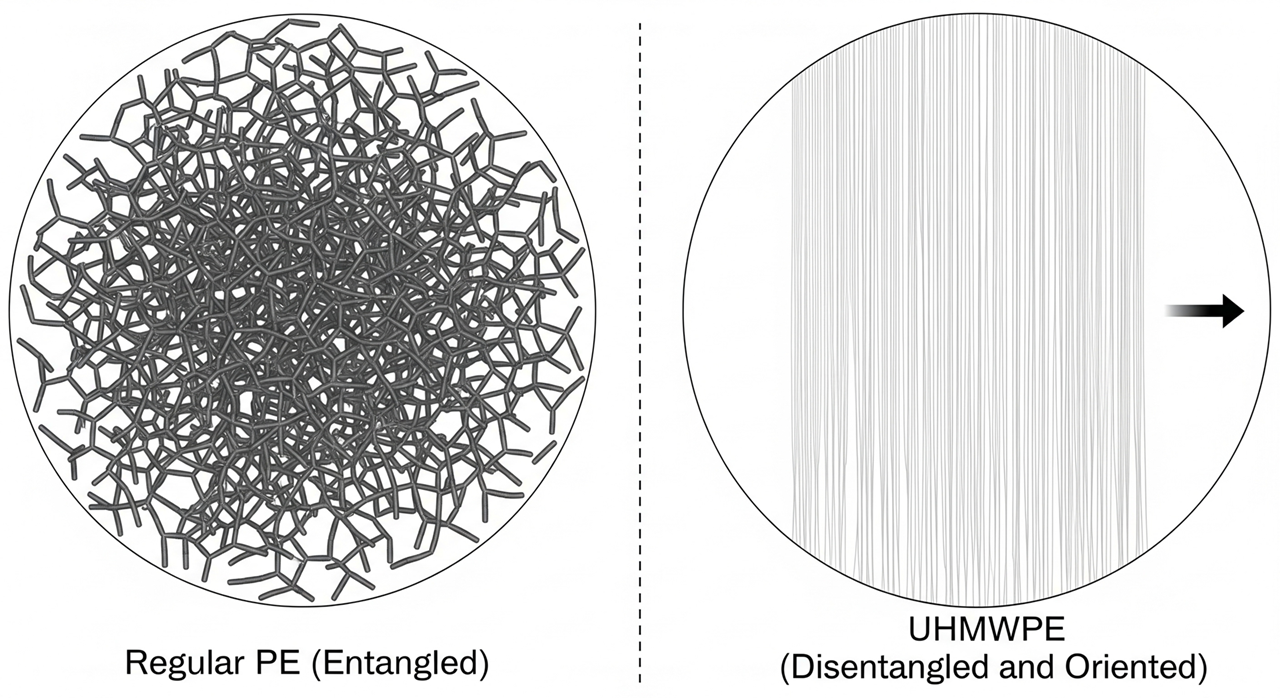
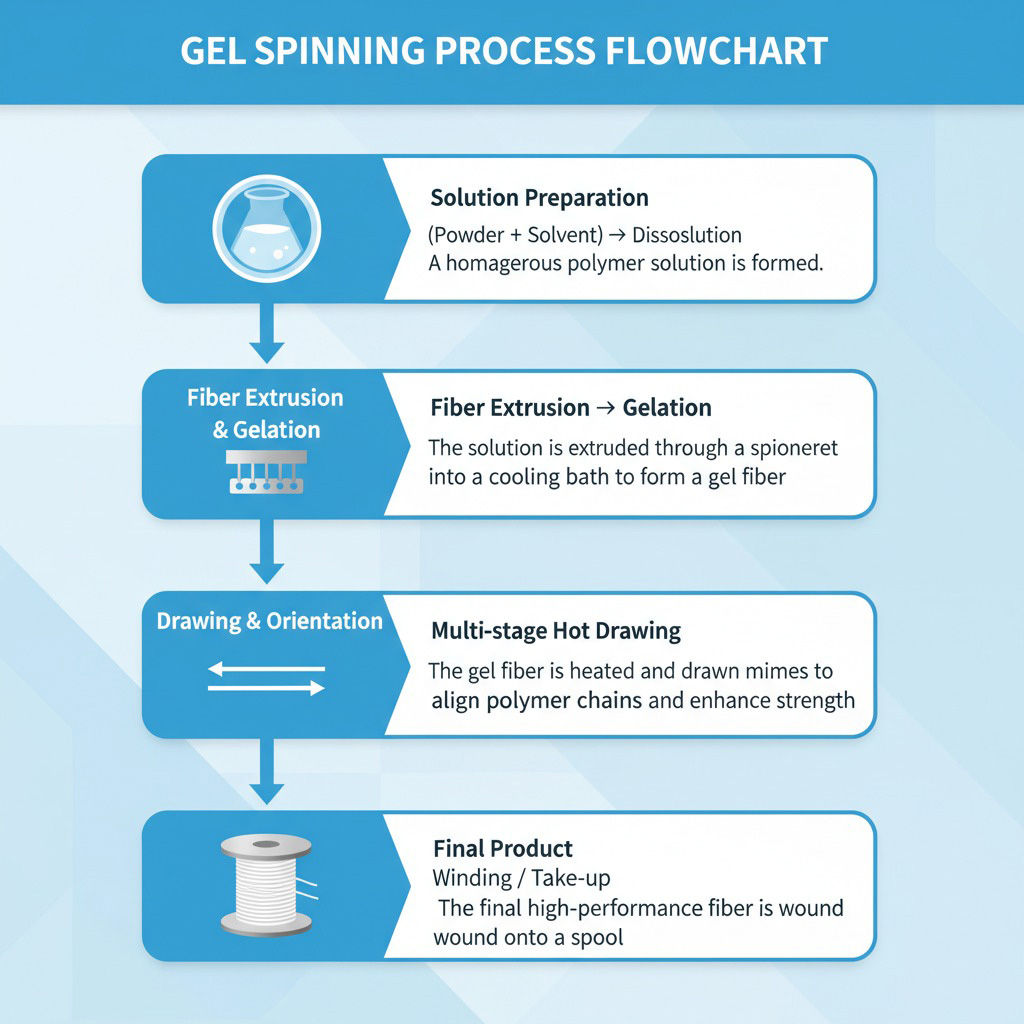
3.0–3.5 GPa
100–150 GPa
≈ 0.97 g/cm³
Superior vs many engineering polymers; ideal for wear‑critical parts
Outstanding; moisture‑insensitive
Inherently low friction; energy‑saving in moving systems
Note: actual performance depends on grade, process, and test conditions. Please refer to datasheets and validation tests.
| Property | UHMWPE | Aramid | Steel Wire |
|---|---|---|---|
| Density (g/cm³) | ~0.97 (very low) | ~1.44 | ~7.8 |
| Specific Strength | Excellent | High | Moderate (by weight) |
| Moisture/Chemical Resistance | Outstanding | Moisture‑sensitive | Corrosion concerns |
| Cut/Abrasion Resistance | Excellent | High | Good but heavy |
| Temperature Tolerance | Lower than aramid; evaluate per use case | Higher; good heat resistance | High but heavy; oxidation issues |
Guidance only. Selection must consider safety factors, environment, and validation tests.
Vests, inserts, helmets; reduce weight 30–60% vs steel‑based solutions (structure‑dependent) while meeting protection levels.
High specific strength and corrosion resistance enable long‑life ropes, tethers, winch lines.
Sutures, orthopedics, and protective gear leveraging low density, low friction, and durable performance.
Lightweight reinforcement; consult surface treatment and bonding guidelines.
Conveyors, liners, wear strips; exploit abrasion resistance to extend service life.
Cut‑resistant gloves, riot gear; balance protection, comfort, and cost.
